The Blood of Dawnwalker Combat Guide
Four directions, a charge meter that is not mana, and a night kit that skips the meter entirely.
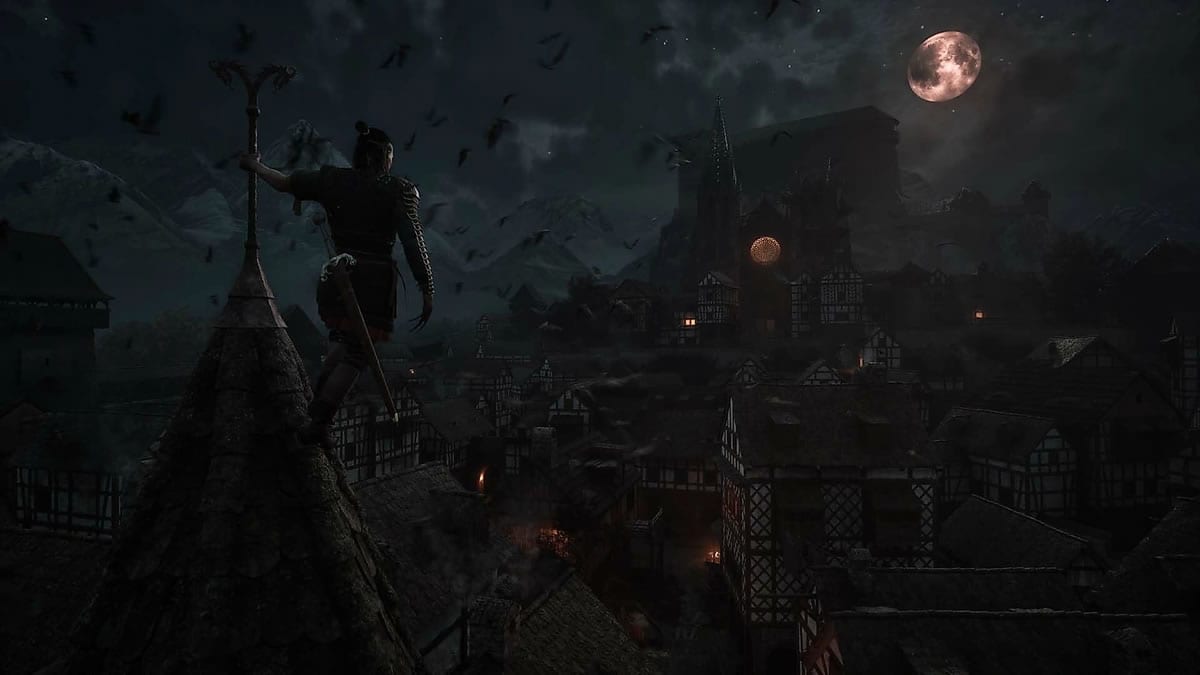
Combat in The Blood of Dawnwalker is third-person and directional: up, down, left, right, in the Kingdom Come Deliverance / For Honor family. You pick a line of attack so the opponent cannot parry. You pick a line of defense so a yellow arrow does not eat your stamina. Perfect parries and connecting swings fill activation charges. Those charges are not a mana bar. Red feeds hexes. Gold feeds physicals such as Acrid Dust and Artery Attack. Vampire abilities skip the meter. Read controls before this page if you have not confirmed binds; a good parry on the wrong button is still a hit.
There are four difficulty levels. Lower the setting if the directional exam is eating your evening. The 30-day story does not grade your pride. Omni-attack and omni-block assists exist for the same reason. Turn them on in Laslea, then peel them off once you can match an incoming arrow without thinking. Konrad Tomaszkiewicz has said the curve is you getting better, not the character quietly cheating for you.
Camera, stamina, and the two lock-ons
The camera is a close lock-on or a farther option. Close lock-on is a duelist’s view: one Blood Guard, readable arrows, easier perfect parries. Far camera is a street view: two attackers, a civilian, and a cart. Swap when the alley fills. Stamina pays for swings, blocks that are not perfect, and dodges. Backing off recharges it. Preview fights love to deny that space by throwing extra bodies at you, which is why a stun (Acrid Dust, Piercing Shriek, Ravenous Flock) is a stamina tool, not only a damage tool.
A correct-direction block that is early or late is still a block; it costs stamina. A correct-direction block on time is a parry; it dumps stamina cost and opens the enemy. Directional attacks are more likely to land because you are swinging where they are not guarding. Repeating the same line is how they learn you. Swordmastery has a Precision-style idea: mixed directions hit harder. Do not mash up-up-up because the first one worked.
Activation charges — red, gold, and the vampire skip
Successful regular attacks, blocks, and parries fill the charge pips under the health bar. That is the engine. Hexes and daytime physicals spend those pips. Night vampire powers do not. If your day kit feels starved, you are missing parries, not missing a hidden mana potion.
| Color | What it buys | Examples |
|---|---|---|
| Red | Witchcraft hexes (day) | Ravenous Flock, Burning Blood, Mercurial Fervour, Compel Soul, Life Lock, Soul Reaping, Astral Communion |
| Gold | Physical tricks (day, some night steel) | Acrid Dust / Dirty Trick, Artery Attack |
| None (vampire skip) | Night powers | Voracious Bite, Shadowstep, Piercing Shriek, Blood Surge, Shadow Storm, Planeshift, Death from Above |
Some hexes also bite your own health. Early bars are thin. Do not dump three reds into a goat-path ambush. Rank cost reductions on the Witchcraft tree if you insist on slinging in every fight. The ability tier list and build planner exist because a shrine segment spent on a hex you never slot is a story day you will not get back. See the time system.
Day fights versus night fights
Daytime is steel plus scars. Weapons are short, long, and great swords. Short is faster and kinder to stamina. Long is the default. Great swords hurt and recover slowly — bad in a three-man alley, fine in a duel. Health does not regenerate in the sun. Drink a consumable between packs. Mercurial Fervour is a hex you press to cross the valley, not a panic button in a duel, unless you already won.
Useful day openers:
- Acrid Dust / Dirty Trick — stun a target so the first directional string is free.
- Ravenous Flock — mark one body, keep hitting it, let the birds splash the pack. That is Mateusz Tomaszkiewicz’s own advice.
- Burning Blood — damage over time on the marked target so the flock keeps triggering.
- Artery Attack — gold physical, often a finisher when the charge bar is fat.
- Life Lock — eat one hit and throw it back. For bosses, not goats.
- Soul Reaping — drain and shove. Creates the space stamina wanted.
- Compel Soul — not a brawler. Use it on corpses after, in daylight.
Night is claws, with steel still available. Directional rules do not go away. What goes away is the charge tax on vampire buttons. Open with Death from Above from a gallery, Shadowstep onto a throat, or Voracious Bite to heal as the fight starts. Piercing Shriek stuns the weak and lets you leave. Blood Surge pops a body. Shadow Storm slows the room. Day and night is the kit page; this page’s rule is: night fights should start already won or already on a wall.
Feeding is combat. A starved Coen is a worse swordsman and a threat to the civilian the camera also sees. Bite a guard, not the quest giver standing behind him.
Trees, manuals, and what “leveling” costs
Three trees. Witchcraft is day, ~31 nodes (21 perks, 10 actives). Swordmastery is always on, ~22 perks and 7 actives. Vampirism is night. Find or buy manuals to reveal nodes, then pay XP and a time segment at a wayside shrine. That is why combat progression is a calendar decision. Swordmastery is the tree you can justify at noon or midnight. Vampirism is wasted on a week of market talk.
Swordmastery passives that matter early: stamina on directional success, crit chance, and anything that rewards mixed lines. Ultimates such as Last Stand (huge weapon damage while low health, in preview trees) are panic buttons, not a build. Do not construct a personality around dying on purpose during a 30-day rescue.
Difficulty, assists, and when to run
Four difficulties. Omni assists. Close or far camera. Those are the accessibility layer. Use them. A missed parry in a street is how infamy happens — extra bodies die, edicts drop, the map gets worse. Running is a combat option. Shadowstep out. Shriek and leave. Daytime dodge toward a shrine, not toward a second pack.
Bosses still read as directional exams. The Forgotten Guardian in Deep Down is the prologue test while Coen is still human. Later vrakhiri elites want the night opener (bite, drop, shriek) plus a steel string. Bakir is a warmonger with Jan Błachowicz’s mocap; do not bring a great sword and a prayer. Xanthe is blood magic; hexes and interrupts matter more than raw length of blade. Ambrus is warehouses and humans; stealth may be the fight.
Getting Started is the first bandit. How to Play is why you should not take every street brawl — they are free on the clock and expensive on consumables. This page is how you win the ones you cannot skip.
Frequently Asked Questions
Quick answers to the most common questions.
Is combat like Kingdom Come or For Honor?
Yes in the directional sense: four lines of attack and defense. Omni-attack and omni-block assists exist if you want the game to pick the line. Confirm binds on controls.
What are activation charges?
Pips you fill by hitting, blocking, and parrying. Red spends on hexes, gold on physicals such as Acrid Dust and Artery Attack. Vampire powers skip the meter.
Does health regenerate in a fight?
Not by day — use consumables. At night, Voracious Bite is the heal. Mixing those habits is how you die. See day and night and feeding.
Should I turn on omni-block?
For the prologue, yes if four-direction combat is new. Turn it off later if you want parry rewards and mixed-line bonuses. Four difficulty levels exist either way.
Which skill tree should I unlock first for combat?
One Witchcraft stun or flock, one Swordmastery stamina perk, one Vampirism bite or Shadowstep. The build planner stops you from spending a shrine segment on a kit you cannot use until dusk.
Can I skip fights?
Often. Street packs do not tick the time system, but they drink consumables and can raise infamy. Shadowstep away unless the job is the fight.