The Blood of Dawnwalker Coen, silver miner and Dawnwalker
Argyria, rune scars, a sword that never leaves his hand, and a family in Greifberg.
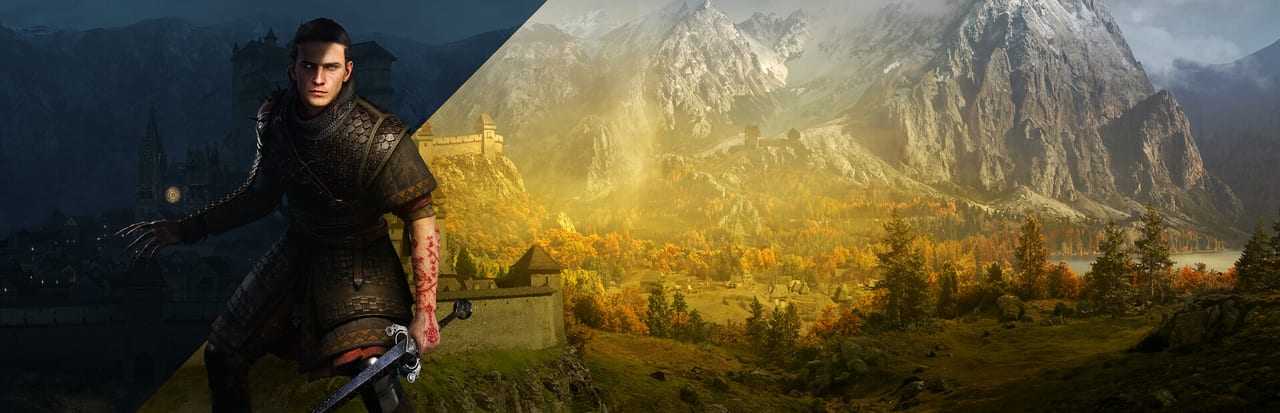
Coen is the only character you control in The Blood of Dawnwalker. He is a young man from the farm village of Laslea in Vale Sangora, the eldest child in a silver-country family that needed him more than he needed the road beyond the Carpathians. He worked the mines with his father until the metal sat in his skin. The grey tint is argyria: silver poisoning that marks him even before vampires do. That stain is not costume. It is the reason the conversion fails, the reason the sun does not burn him, and the reason Brencis’s people write him off as a corpse.
This page is the protagonist file. For the court that holds his family, read Brencis and the officers. For Anca, Lacra, Marat, and romance, read allies. The characters hub lists all three.
Family, plague, and the failed turning
Coen’s household is small and already sick before the Vrakhiri take the valley. His mother lives with a neurological illness the village cannot name. His siblings, including youngest sister Lunka, grow up under a father pulled between the mine and a past he does not discuss at the table. When the Black Death reaches Laslea, the human lord Skender orders the infected purged. Coen tries to keep Lunka alive. Vampire blood does what herbs cannot. The same night, Brencis’s people attempt to turn Coen into a willing henchman: a familiar face who can walk back into the village and finish the knife-twist. The silver in his blood rejects the rite. They believe he died. He wakes as a Dawnwalker.
The family does not walk the map with you. Brencis takes them to Greifberg Castle above the capital Svartrau and schedules them as sacrifices for his investiture as Prince, thirty days out. You see them most clearly at the start of the month and at the end. The rest of the campaign is the gap you spend trying to arrive on time.
What a Dawnwalker actually is
By day Coen is human. He talks without terrifying the room. He reads. He takes Anca’s lessons. Witchcraft lives in the hex runes she carved into his skin; those scars are a kit, not a tattoo. Hexes work while the sun is up. At dusk the scars heal and the witchcraft sleeps. By night he is a vampire who can still stand in moonlight without the usual rules. The sun does not burn him at dawn, which is the whole point of the name. Claws and Shadowstep unlock after dark. The sword stays in his hand in both halves of the clock. That is the one constant: Rebel Wolves built the combat around a man who never puts the blade away, then layered Witchcraft on the day and Vampirism on the night. Swordmastery is the spine you can spend on either side.
The day and night split is not a filter on the same quest. Day favors talk, infiltration, and hexes. Night favors traversal, claws, and feeding. You can walk the map in either form; only listed jobs spend hourglass segments. Leveling at a wayside shrine also costs time. If you treat Coen as a loot pinata who must max three trees before Greifberg, you will miss the coronation. The build planner exists so you do not buy a night node at noon.
Hunger, infamy, and the court that thinks you are dead
Blood hunger is not a difficulty slider. A starved Coen is a liability in a village full of names. Feeding is a system with victims, timing, and consequences; bite the wrong person and a quest line ends because the quest giver is a corpse. Infamy with the vampire court is the other meter. While the Vrakhiri believe the conversion killed him, Coen can move through occupied ground as a rumour. Get loud in Svartrau, raid the wrong warehouse, or Shadowstep through a Blood Mass in front of witnesses, and the court updates its file. Officers start hunting a Dawnwalker instead of a ghost. That changes patrols, dialogue, and how Brencis greets you at the end of the month.
Uriash ram-like warriors occupy villages for the clan. They are the daytime muscle of a night regime. Coen can pick a fight with them in Laslea on the first morning, or he can walk past, find Anca, and spend the Blood Mass hours learning to read. Both are in-character. Neither is free if it sits on a quest timer.
How to play him without wasting the month
Keep one day opener, one sword staple, and one night traversal node. Do not romance, raid, and shrine-level on the same afternoon. Coen’s curiosity is written into the text — he wanted the road out of the valley — but the story that remains is the opposite: a man who cannot leave because the people who bound him to Laslea are now in a castle. The time system is how that bind is enforced. If you need the first-hour loop, use getting started. If you need the sandbox rules after the prologue, use how to play. Then come back here when a choice asks who Coen still is after dark.
Frequently Asked Questions
Quick answers to the most common questions.
Why does sunlight not burn Coen?
The failed conversion left him a Dawnwalker. Silver poisoning (argyria) from years in the mines is the lore reason the rite did not finish. He is human by day and vampire by night, without the usual sun-death.
Can Coen use vampire powers during the day?
No. Claws and Shadowstep lock until night. Witchcraft hexes from Anca's rune scars work in daylight and fade when the scars heal at dusk. The sword is always available.
Where is Coen's family during the campaign?
Brencis holds them at Greifberg Castle for the investiture as Prince. You see the household most at the start and end of the thirty days, not as travelling companions.
Does the vampire court know Coen survived?
At the start they believe he died in the turning. Infamy and public violence can correct that mistake. A louder Coen meets a more aggressive court.
Is Coen a silent protagonist?
No. He is a written character with a family, a mining past, and a voice. Full voice acting includes English and Polish among the six spoken languages.